Mushroom Extracts
The Guide to Lion's Mane: Why Extraction Ratio and Beta-Glucans Make All the Difference
August 25, 2026 · 6 read
Functional mushrooms have transitioned from traditional Eastern herbal culture to a central spot in modern Western wellness. Among these, Lion's Mane (Hericium erinaceus) has become one of the most talked-about and sought-after species. However, the market offers everything from basic dried mushroom powder to highly potent, standardized extracts. In this article, we delve into the mushroom's biology, why the extraction method plays such a crucial role, and what 60% polysaccharides and 45% beta-glucans actually mean for the quality of the product you choose.
Historical Background and the Mushroom's Unique Character
Lion's Mane, known in Latin as Hericium erinaceus, is a striking and easily recognizable mushroom that grows wild on old hardwood trees, particularly oak and beech. With its long, white, cascading spines, it resembles a lion's mane or a coral formation, giving rise to its characteristic name. In East Asia—especially within traditional Chinese and Japanese herbal traditions—the mushroom has been used for centuries, both as a culinary delicacy and as a valued ingredient in traditional brews.
Historically, the mushroom was harvested by hand and prepared by simmering it in water or teas to release its inherent compounds. Today, we know that the traditional method of heating the mushroom in liquid was actually an early form of extraction. By applying heat, the mushroom's tough cell walls are broken down, making the bioactive components accessible. As global interest in functional mushrooms has grown, the demand for more precise and refined preparations has led to the development of modern, standardized extracts.
Mushroom Powder vs. Mushroom Extract – What Is the Difference?
When evaluating mushroom supplements, you are often faced with the choice between two main forms: ground mushroom powder and concentrated mushroom extract. To understand the difference, one must look at the mushroom's cellular structure. Mushroom cell walls consist of chitin, the same tough and hard-to-digest carbohydrate molecule that forms the exoskeleton of crustaceans. The human digestive tract lacks the enzymatic capacity to efficiently break down chitin in raw or simply dried forms.
A basic mushroom powder is produced by drying the whole mushroom and grinding it into a fine powder. While this powder contains the complete matrix of the mushroom, the presence of intact chitin means that the concentration of desired compounds is low per gram of product. Furthermore, it is difficult for the body to absorb the nutrients, as they remain locked inside the tough cellular structure.
Through extraction, the mushroom is processed with hot water or alcohol under controlled conditions. This process effectively breaks down the chitin structure and frees the valuable components. The indigestible fibrous material is then filtered out, leaving a concentrated powder with a significantly higher percentage of active ingredients per capsule. When you choose a standardized Lion's Mane extract, you receive a cleaner and more bioavailable product compared to unextracted mushroom powder.
What Are Polysaccharides and Beta-Glucans?
Terms like polysaccharides and beta-glucans often appear in connection with mushroom supplements, but what do they actually mean? Polysaccharides are complex carbohydrates consisting of long chains of sugar units. In mushrooms, these act as both structural components and energy reserves. There are many types of polysaccharides, and not all are equally valuable from a nutritional perspective.
Beta-glucans are a specific subgroup of polysaccharides (specifically 1,3/1,6 beta-glucans in mushrooms) that have drawn the most interest within mushroom biology. Simply stating a high total polysaccharide content on a product label is not always a guarantee of high quality, as fillers or residual starches from rice or oat substrates (if grown on grain) are also counted as polysaccharides.
Therefore, it is crucial to look at the specific concentration of beta-glucans. A high-quality, well-formulated mushroom product is characterized by the following factors:
- High extraction ratio (e.g., 60% polysaccharides), confirming that the raw material has been highly concentrated.
- Guaranteed level of beta-glucans (e.g., 45%), ensuring that the polysaccharides actually originate from the mushroom's active compounds and not from added grain substrates.
- Purity from unnecessary fillers or binders, leaving room exclusively for the active extract in the capsule.
- Standardized manufacturing where every batch maintains a consistent and verified concentration over time.
Purity and Manufacturing Without Unnecessary Additives
In dietary supplements, product purity is just as important as the concentration of active ingredients. Many traditional capsules contain fillers, anti-caking agents such as magnesium stearate or silicon dioxide, and synthetic dyes. When seeking a pure plant-based supplement, avoiding these additives entirely is ideal.
By using a highly concentrated extract, the need for fillers is eliminated, as each capsule can be filled solely with pure extract. A modern approach involves encapsulating the extract in a fully vegan cellulose capsule (HPMC). This guarantees that the product is free from gelatin, gluten, GMOs, sweeteners, and preservatives. Furthermore, manufacturing the product in Sweden in small batches ensures strict compliance with European safety and quality standards.
The art of choosing a premium mushroom supplement is not about the volume of powder, but about the extraction ratio and the documented proportion of beta-glucans.
Metilde's Editorial Team on Mushroom Extracts
How to Incorporate Lion's Mane into Your Daily Routine
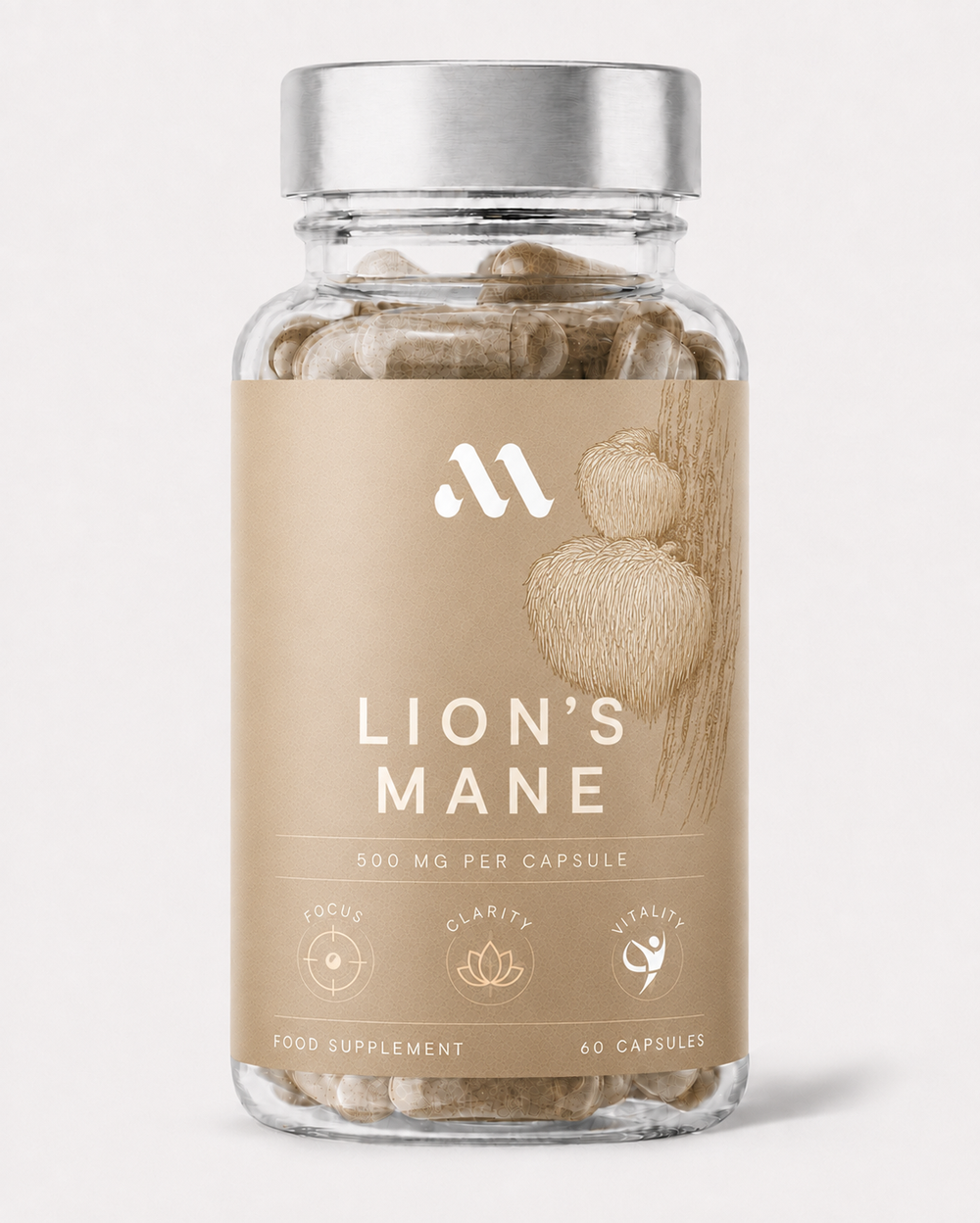
Integrating a standardized Lion's Mane extract into your daily routine is simple. Because the extract is highly concentrated, a single capsule per day is often sufficient, providing 500 mg of high-potency extract. This means a pack of 60 capsules lasts for two full months of regular use.
The capsule can be taken with a glass of water alongside your first meal of the day or morning coffee. If preferred, the capsule can also be opened and the powder stirred directly into hot water, tea, or a smoothie—fully in line with how the mushroom has traditionally been consumed throughout history. Thanks to the resealable and recyclable paper pouch packaging, the extract is protected from moisture and light while keeping environmental impact low.
This content is general information about raw materials and routines and does not replace advice from healthcare or a pharmacy. Supplements do not replace a varied diet.